




















Controlling Powdery Mildew in Chilli for Healthy Harvests
This article explores the causes, symptoms, lifecycle, and integrated management strategies to effectively control powdery mildew in chilli crops.

Chilli is a widely cultivated and economically significant crop in India and across the globe. Valued for its pungency and flavor, chilli contributes to both domestic consumption and export revenue. However, its cultivation faces several challenges, among which powdery mildew of chilli stands out as a major disease affecting yield and quality.
Powdery mildew is a fungal disease that attacks the foliage, stems, and fruits of chilli plants, causing a powdery white growth that can weaken the plant and lead to reduced productivity. Left unmanaged, the disease can cause severe crop losses, especially in dry and warm climates where it thrives. This article explores the causes, symptoms, lifecycle, and integrated management strategies to effectively control powdery mildew in chilli crops.
Understanding Powdery Mildew of Chilli
Powdery mildew of chilli is primarily caused by the fungus Leveillula taurica, though other species like Erysiphe cichoracearum may also be involved in some regions. The disease commonly appears during dry weather with high humidity, particularly during the flowering and fruiting stages of the plant.
Unlike many other fungal diseases, powdery mildew does not require free water on the leaf surface to infect the plant, which makes it more difficult to control using conventional moisture management strategies.
Symptoms of Powdery Mildew in Chilli
Timely identification of the disease is crucial for effective control. Common symptoms include:
-
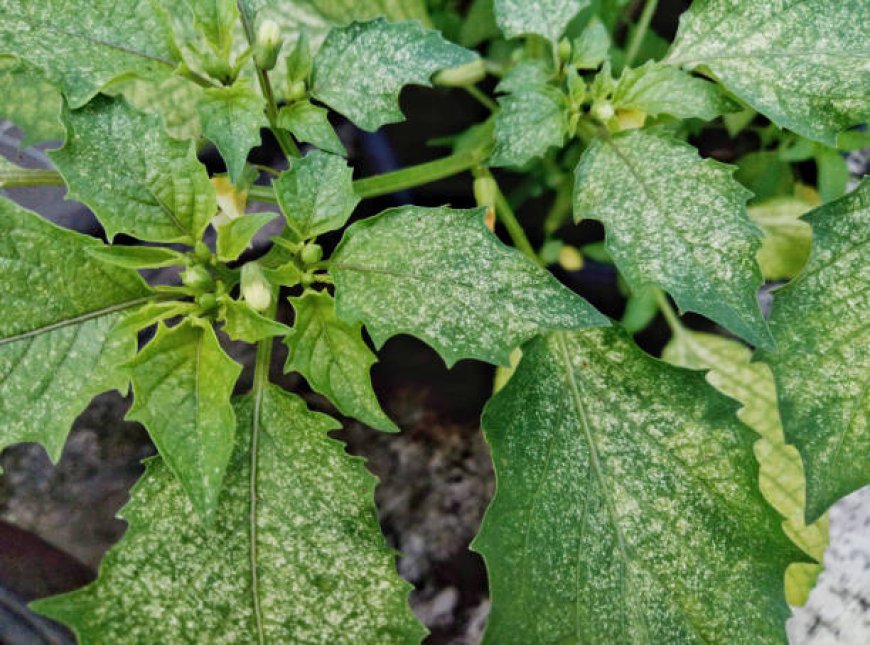
White Powdery Patches: These develop first on the undersides of older leaves and may later spread to the upper surfaces, stems, and young fruits.
-
Leaf Curling and Yellowing: Infected leaves curl upward and develop yellow spots.
-
Premature Leaf Drop: As the disease progresses, infected leaves may dry and fall off.
-
Stunted Growth: Severe infections reduce the plants vigor and productivity.
-
Poor Fruit Development: Infected plants often yield smaller, misshapen, or discolored fruits.
These symptoms typically appear in patches and can spread quickly if left unchecked.
Conditions Favoring Disease Development
Understanding the environmental conditions that favor powdery mildew of chilli is essential for prevention:
-
Temperature: Optimal range is 2030C.
-
Humidity: High relative humidity (above 60%) with dry foliage promotes spore germination.
-
Air Circulation: Poorly ventilated fields or dense planting increase disease incidence.
-
Nutrient Imbalance: Excessive nitrogen promotes tender tissue, which is more susceptible.
These conditions often coincide during late kharif or early rabi seasons, especially in semi-arid regions.
Disease Cycle and Spread
The fungus survives between crop seasons on infected plant debris or alternate host plants such as tomato, brinjal, or weeds. Spores are carried by wind over short and long distances. After landing on a suitable host, they germinate and penetrate the leaf surface, forming white fungal colonies.
The pathogen completes its lifecycle rapidly under favorable conditions, and repeated cycles of infection can occur within a single season, leading to explosive disease spread.
Integrated Disease Management Strategies
Managing powdery mildew of chilli effectively requires a combination of cultural, biological, and chemical strategies. Below are key integrated pest management (IPM) approaches:
1. Cultural Practices
-
Proper Spacing: Avoid dense planting to improve air circulation and reduce humidity.
-
Field Sanitation: Remove and destroy infected plant debris after harvest.
-
Crop Rotation: Rotate with non-host crops like cereals to break the disease cycle.
-
Resistant Varieties: Use disease-resistant or tolerant chilli varieties if available.
-
Balanced Fertilization: Avoid excess nitrogen and ensure adequate potassium for stronger plant immunity.
Cultural methods form the foundation for reducing initial disease pressure.
2. Biological Control
Several biological agents can help suppress the growth and spread of powdery mildew fungi:
-
Trichoderma harzianum: Applied to the soil or as a foliar spray, it competes with fungal pathogens.
-
Ampelomyces quisqualis: A mycoparasite that directly attacks powdery mildew fungi.
-
Neem Oil: Acts as a natural antifungal and repellent when sprayed regularly.
Biological options are safe, eco-friendly, and reduce dependence on synthetic chemicals.
3. Chemical Control
When the disease crosses the economic threshold level, chemical control becomes necessary. Effective fungicides include:
-
Sulphur-based Fungicides: Wettable sulphur (0.2%) is widely used as a preventive and curative measure.
-
Systemic Fungicides: Like hexaconazole (0.1%), difenoconazole (0.1%), and myclobutanil offer good control.
-
Contact Fungicides: Mancozeb and chlorothalonil can be used in rotation to prevent resistance.
Application Guidelines:
-
Begin sprays at the first sign of infection.
-
Repeat at 1014 day intervals during favorable conditions.
-
Rotate between fungicide groups to prevent resistance build-up.
Always follow label instructions and pre-harvest intervals to ensure food safety.
4. Monitoring and Early Detection
Regular field scouting helps detect early signs of powdery mildew of chilli, enabling timely action:
-
Weekly Inspections: Especially during the flowering and fruiting stages.
-
Focus Areas: Undersides of leaves and lower canopy areas where the disease often starts.
-
Record Keeping: Note disease progression and effectiveness of interventions for future reference.
Monitoring also helps evaluate the success of your management strategy and adjust accordingly.
Economic Impact of Powdery Mildew in Chilli
The disease can lead to significant economic losses by:
-
Reducing marketable yield due to poor fruit quality
-
Increasing input costs through repeated fungicide use
-
Lowering plant health and affecting subsequent harvests
In export markets, residue limits on produce require careful chemical use, adding to the importance of integrated and preventive management practices.
Conclusion
Powdery mildew of chilli is a common but potentially devastating disease that requires proactive management. By combining good cultural practices with timely biological and chemical interventions, farmers can control this disease effectively and protect their crop yield and quality.
Adopting an integrated approach not only reduces dependence on chemicals but also contributes to sustainable chilli production. With regular monitoring and early detection, the disease can be managed before it impacts productivity, ensuring healthy harvests and higher profits for chilli growers.